
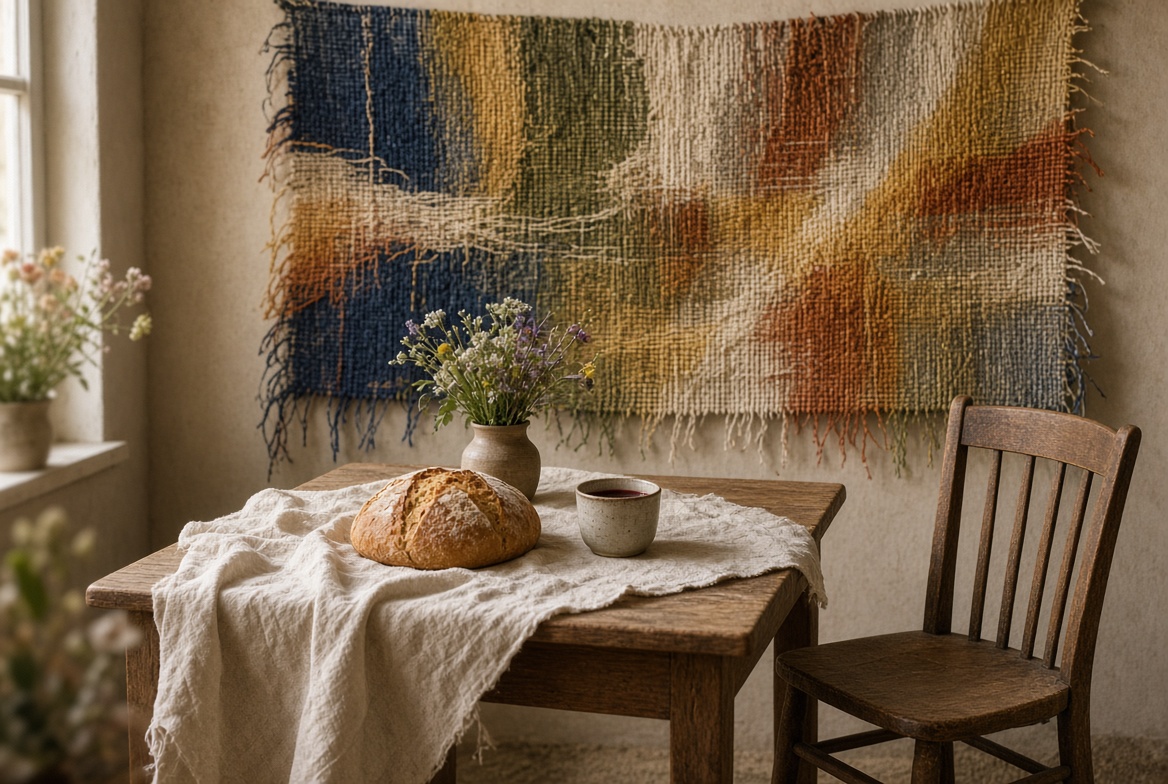
You don’t have to look very far to see how easily our differences can begin to divide us. We compare ourselves with one another. We decide that some voices or gifts are more important than others. And sometimes the very differences that could make a community richer become the things that pull us apart.
Apparently, things weren’t all that different in the early church.
When Paul wrote to the church in Corinth, he was writing to a multiethnic, socially and economically diverse gathering of Christians. They had plenty of threads—but they weren’t forming a particularly harmonious pattern.
And so Paul reminds them: “The body is not made up of one part but of many.”
We are all baptized by the same Holy Spirit, and while we hold onto the sacred cultural and ancestral threads woven into our lives, our experience of the Spirit of God unites us as brothers and sisters in the Kingdom of God. We are better together, stronger together, more hopeful together when we remember that we share the same water, the same promise, the same Spirit—and are equally part of the same body of Christ.
That body stretches far beyond our own sanctuary. It worships in different styles and languages, with different music, traditions, and understandings. We all bring our unique lenses, our unique stories, our unique pieces of thread to the tapestry.
And when those threads are woven together, this global tapestry becomes more than a beautiful piece of art to look at. It is a living, breathing body with a shared nervous system.
When one part hurts, we hurt. When another celebrates, their joy becomes ours.
On World Communion Sunday, we get to see that body gathered around one Table. We share a sacred meal with Christians around the world, remembering that despite our different cultures, traditions, and experiences, we belong to the same family.
We are each one small thread in a tapestry begun thousands of years ago and still being woven today. And there is room at this Table, and in this beautiful, vibrant body of Christ, for every one of us.


